
Loved across continents and cultures, football endures because it is simple to play, powerful to watch and uniquely capable of turning strangers into teammates and communities into crowds.
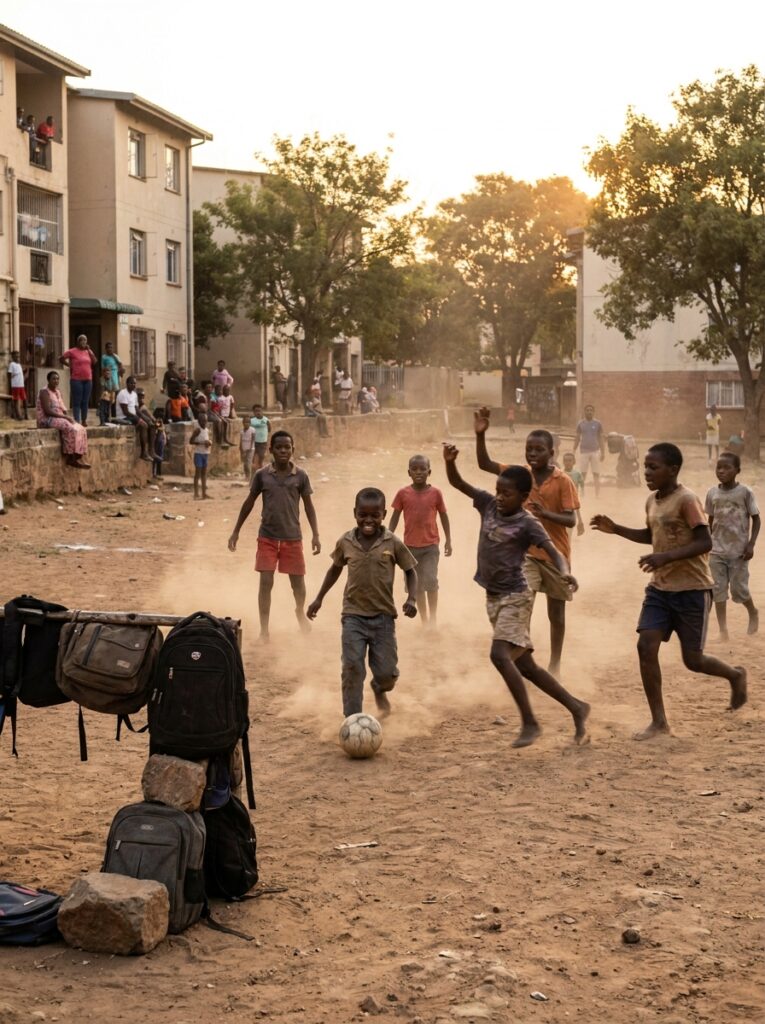
On a dusty street, a school playground, a stadium under floodlights or a beach marked by sandals instead of white lines, football begins with a simple idea: a ball, a space and people willing to play. Few sports require so little to start and create so much once they do. That simplicity helps explain why football has become the world’s most loved game, crossing borders of language, income, religion, class and nationality.
Football is often called the global game because it belongs almost everywhere. Children play it in narrow alleys and open fields. Professionals perform it in front of tens of thousands. Fans follow it through television, radio, phones and crowded cafes. The same basic movement — passing, running, defending, shooting — can be understood in any country. A person may not speak the local language, but if a ball rolls into the street, the invitation is immediately clear.
The appeal begins with accessibility. Many sports require expensive equipment, specialized facilities or strict conditions. Football can be played with a real ball, a plastic bottle, a bundle of cloth or anything that can be kicked. Goals can be made from stones, bags, shoes or trees. A full team is ideal, but two people can still play. This low barrier allows football to grow naturally in communities that may not have formal sports infrastructure.
Its rules are also easy enough for beginners to understand. The objective is direct: put the ball into the opponent’s goal while preventing them from doing the same. Beneath that simplicity lies deep tactical complexity, but a person does not need to master formations or professional strategy to enjoy the game. Football welcomes both the casual child and the elite analyst.
The sport’s emotional power comes from uncertainty. A match can be dominated by one team and still turn on a single counterattack, a goalkeeper’s save, a penalty, a red card or a moment of brilliance. Because goals are relatively rare, each one carries enormous emotional weight. A single shot can make a city erupt. A missed chance can leave millions silent. Football stretches tension across 90 minutes and then releases it in seconds.
This emotional rhythm makes football a shared experience. Fans do not merely watch; they participate with their voices, gestures, songs, rituals and memories. In stadiums, the crowd becomes part of the event. In homes and cafes, families and friends gather around screens. During major tournaments, people who rarely follow club football may suddenly wear national colors, learn players’ names and organize their days around kick-off times.
Football also carries identity. A club can represent a neighborhood, a city, a working-class history, a political memory or a family tradition passed from one generation to the next. A national team can become a symbol of pride, especially in countries where sport offers a rare moment of unity. When a team wins, supporters often feel that something larger than sport has been recognized: their place, their people, their story.
This power can be beautiful. Football can bring together people who otherwise disagree. In a stadium, a taxi driver, a doctor, a student and a shopkeeper may stand side by side singing the same song. On a local pitch, children from different backgrounds learn to cooperate before they fully understand the social differences adults place around them. The game creates a temporary community with a common purpose.
Teamwork is at the heart of football’s appeal. No player, however talented, can control a match alone. A striker depends on a pass. A midfielder depends on movement ahead. A defender depends on communication with the goalkeeper. A goalkeeper depends on trust from the back line. Every role matters, including the quiet ones that casual viewers may overlook. The best teams are not always those with the biggest stars, but those that understand one another.
This is why football teaches lessons beyond sport. It rewards discipline, patience, communication and sacrifice. A player may need to run without touching the ball to create space for a teammate. A defender may make a block that receives less attention than a goal but saves the match. A substitute may enter late and change the result after spending most of the game waiting. Football teaches that collective success often depends on invisible work.
The sport also teaches resilience. Losing is unavoidable. Even great teams fail, and even great players miss penalties, make mistakes and face criticism. In football, failure is public and immediate. But the game continues. There is another training session, another match, another season. For young players, this can build emotional strength: the ability to recover, improve and return.
At the community level, football can provide structure. Local clubs give children a place to go after school. Coaches may become mentors. Teammates may become friends. Parents and volunteers build networks around training sessions and weekend matches. In many places, the football field functions as more than a sports facility. It is a social center where people meet, talk, organize and belong.
The global business of football has also increased its reach. Major leagues, international tournaments, sponsorships, streaming platforms and social media have turned players into worldwide figures. A teenager in Asia can follow a club in Europe. A fan in Africa can admire a South American forward. A child in South America can copy the celebration of a player from Africa or the Middle East. Football culture now travels instantly.
Yet football’s popularity is not only created by money and media. Its deepest roots remain local. The professional game may produce icons, but love for football often begins with informal play: the first goal scored in a schoolyard, the first pair of boots, the first match watched with a parent, the first team chosen with friends. These early memories give football emotional durability.
The game’s universality also comes from its physical language. Football expresses joy, frustration, courage and hope without translation. A sliding tackle, a final whistle, a missed header, a captain lifting a trophy or a goalkeeper comforting a teammate can be understood by people from different cultures. The body speaks before words are needed.
Football is not without problems. Racism, corruption, violence, commercial excess, unsafe stadiums and abusive fan behavior have damaged the sport at different times and places. The same passion that unites people can also divide them when identity becomes hostility. Rivalry can inspire atmosphere, but it can also become aggression. The challenge for football is to protect its emotional intensity while rejecting the behavior that turns belonging into exclusion.
The best version of football is inclusive. It gives girls and boys, amateurs and professionals, disabled athletes and casual players a chance to experience movement, competition and connection. The growth of women’s football has expanded the meaning of the global game, showing that football’s power was never limited to one gender. As more girls see women playing at the highest level, the circle of participation becomes wider.
Football’s future will be shaped by how well it balances tradition and change. Technology may improve refereeing. Data may change tactics. Streaming may transform how fans watch. Global tournaments may become larger and more commercial. But the core of the sport will remain familiar: a team trying to move the ball together, a crowd holding its breath, and a moment when individual skill and collective effort meet.
That is why football continues to matter. It is simple enough for a child to invent and complex enough for a lifetime of study. It is personal and communal, local and global, joyful and heartbreaking. It gives people a reason to gather, a language to share and a team to believe in.
In a divided world, football does not solve every problem. No sport can. But it can create moments when difference becomes secondary to participation, when strangers celebrate together, when effort is shared and when people remember the strength of belonging. The ball is small, but the circle it draws around people is enormous.”””
