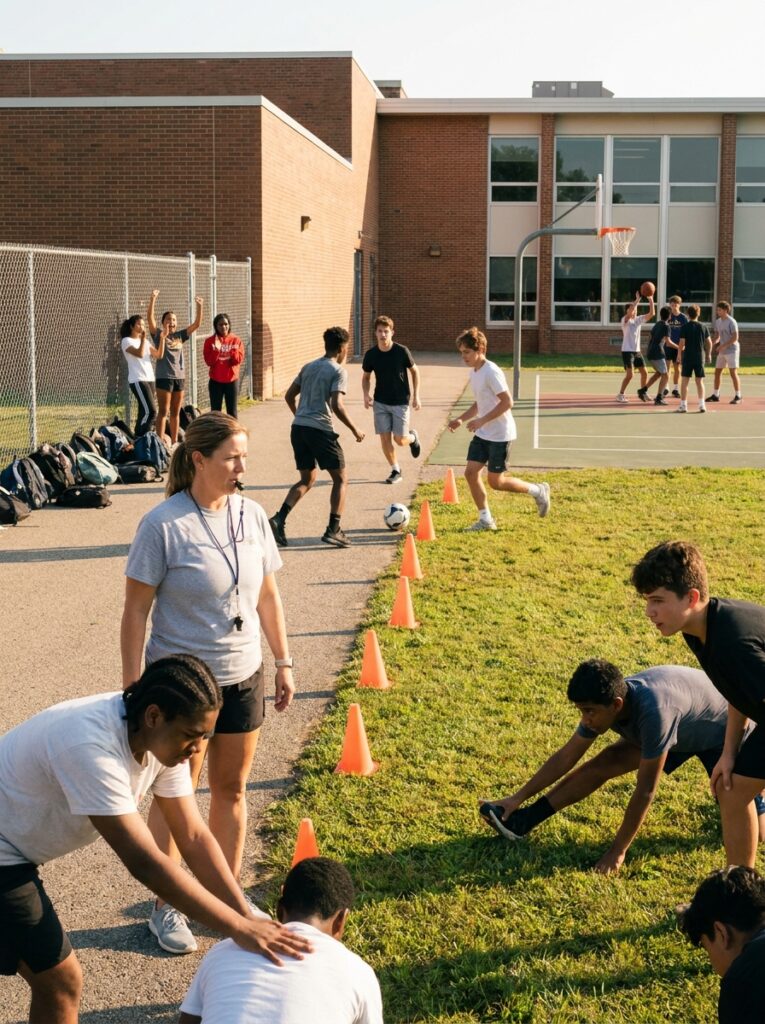
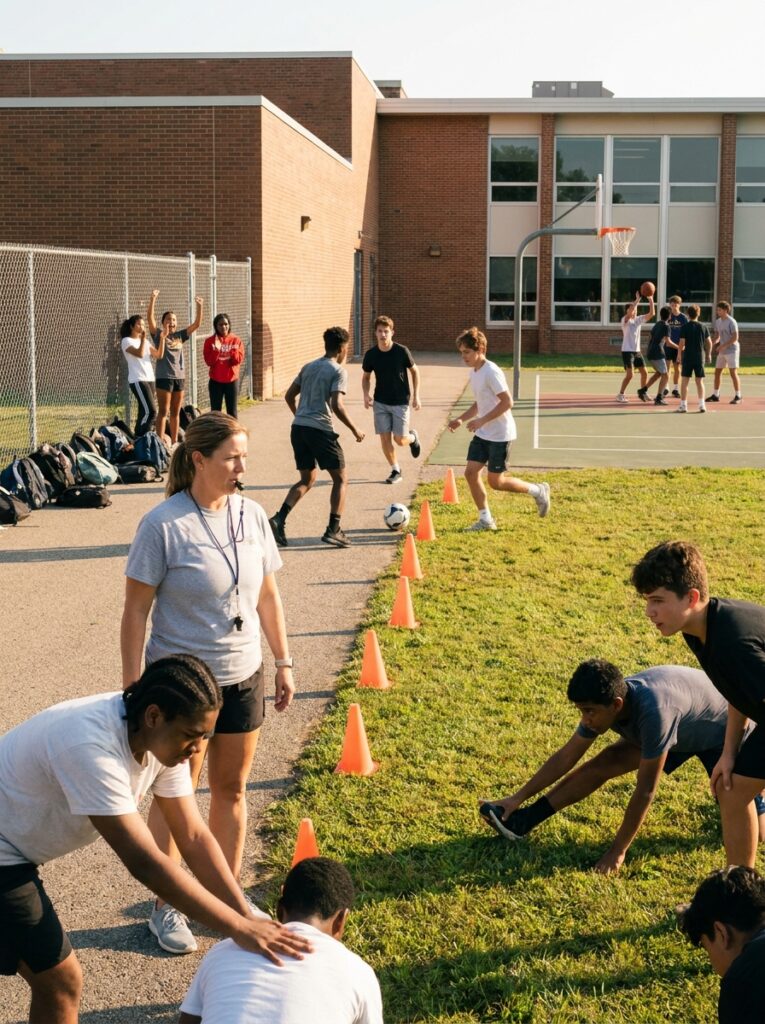
Regular participation in sports can strengthen students’ bodies, improve mental well-being and support learning, but schools must make physical activity safe, inclusive and accessible to all.
In classrooms around the world, academic success is often measured by grades, examinations and the ability to sit still for long hours. Yet a growing body of health and education evidence points to a simple truth that many teachers, parents and coaches have long understood: students learn better when their bodies are active. Sport is not a distraction from education. When organized well, it is part of education itself.
For children and adolescents, sport offers one of the most practical ways to build physical health. Running, swimming, football, basketball, volleyball, martial arts, athletics and other activities strengthen the heart and lungs, develop muscles, improve coordination and support healthy bones. In an age when many students spend long periods sitting in classrooms, using computers and scrolling on phones, organized sport provides structured movement that the body urgently needs.
The physical benefits are often the easiest to see. A student who plays sport regularly may gain endurance, flexibility, balance and strength. These benefits matter not only for competition, but for daily life. A healthier body helps students walk to school, carry a backpack, concentrate through the day and avoid the fatigue that comes from inactivity. Physical activity also helps reduce the risk of excess weight gain and supports healthier long-term habits. Childhood and adolescence are critical periods for establishing patterns that may continue into adulthood.
Sport also teaches students how to understand their bodies. A child who learns to warm up, cool down, stretch, hydrate and rest gains practical knowledge about self-care. These lessons can be more powerful than abstract health advice. Through sport, students discover that the body responds to training, sleep, nutrition and discipline. They also learn that improvement takes time. This is a valuable lesson in a world that often rewards speed and instant results.
The mental health benefits are equally important. School life can bring pressure from exams, family expectations, social comparison and uncertainty about the future. Sport offers a healthy outlet for stress. Physical activity can improve mood, reduce tension and give students a break from constant academic and digital demands. A playing field, gymnasium or swimming pool can become a space where a young person is not only a test score, but a teammate, a runner, a goalkeeper, a captain or a learner.
Team sports are especially powerful because they create belonging. Students who play together must communicate, trust one another and share responsibility. They experience victory and defeat collectively. They learn that success depends not only on individual talent, but on cooperation. For students who feel isolated, sport can provide a community. For those who struggle with confidence, gradual improvement in physical skills can build self-esteem. For those who are shy, a team may offer a structured way to form friendships.
Individual sports offer different but equally valuable lessons. Running, swimming, tennis, gymnastics or martial arts can teach self-discipline, concentration and personal responsibility. Students learn to set goals, track progress and manage frustration. They discover that failure is not final. A missed shot, a lost race or a poor performance becomes part of learning rather than proof of inadequacy. This mindset can carry into the classroom.
The connection between sport and learning is often underestimated. Physical activity can support attention, memory and classroom behavior. Students who move regularly may find it easier to focus, manage restlessness and return to academic tasks with more energy. This does not mean sport automatically produces higher grades, nor that every athlete becomes a top student. But it does show that the brain and body are not separate systems. A school that protects time for physical activity is not taking time away from learning. It is helping create conditions in which learning can happen.
Sport also teaches skills that exams do not always measure. Students learn punctuality when practice begins on time. They learn responsibility when teammates depend on them. They learn leadership when they encourage others. They learn emotional control when a referee makes a difficult call. They learn resilience when they lose and must try again. These social and emotional skills are central to success in school, work and life.
For adolescents, sport can be especially important during a period of rapid physical and emotional change. Teenagers often face intense pressure around appearance, popularity and identity. Sport can help them value the body for what it can do, not only how it looks. When coaches and schools emphasize health, effort and respect rather than only winning, sport can protect students from harmful comparison. It can give them a positive relationship with movement that lasts beyond school years.
However, the benefits of sport are not automatic. Poorly managed sports programs can create stress, exclusion or injury. If only the most talented students are encouraged, others may feel embarrassed and withdraw from physical activity altogether. If coaches focus only on winning, students may learn fear rather than confidence. If training ignores rest and safety, injuries can undermine health. The purpose of school sport should be development, not pressure.
Inclusivity is therefore essential. Students differ in ability, body type, disability status, culture, gender, confidence and access to equipment. A good school sports program gives every student a meaningful chance to participate, not only those who are already athletic. This may require a mix of competitive teams, recreational clubs, physical education classes, dance, fitness activities and adapted sports. The goal is not to turn every student into an elite athlete. The goal is to help every student experience movement as useful, enjoyable and safe.
Parents also play a major role. They can encourage children to try sports without turning every match into a judgment of success or failure. They can support regular sleep, balanced nutrition and time management. They can praise effort, teamwork and persistence rather than only medals and trophies. When parents treat sport as part of healthy development, children are more likely to enjoy it and continue.
Schools must also address barriers. Some students do not participate because facilities are poor, fees are high, schedules are crowded or uniforms and equipment are unaffordable. Girls in some communities may face cultural or safety barriers. Students with disabilities may be excluded because programs are not adapted. If sport is to improve student health broadly, it must be planned as a public good, not a privilege for a few.
Modern education often speaks about preparing students for the future. That future will require not only knowledge, but health, discipline, cooperation, confidence and emotional balance. Sport contributes to all of these. It helps students build stronger bodies, manage stress, form friendships and develop habits that support learning. It gives young people a place to practice effort, failure and recovery in a visible and memorable way.
The best schools will not ask students to choose between books and sport. They will understand that both are necessary. A student who reads, thinks, runs, plays, rests and connects with others is being educated more fully than one trained only to sit and memorize. Sport is not simply an after-school activity. It is one of the most effective tools schools have for shaping healthier, more resilient and more capable young people.
“””