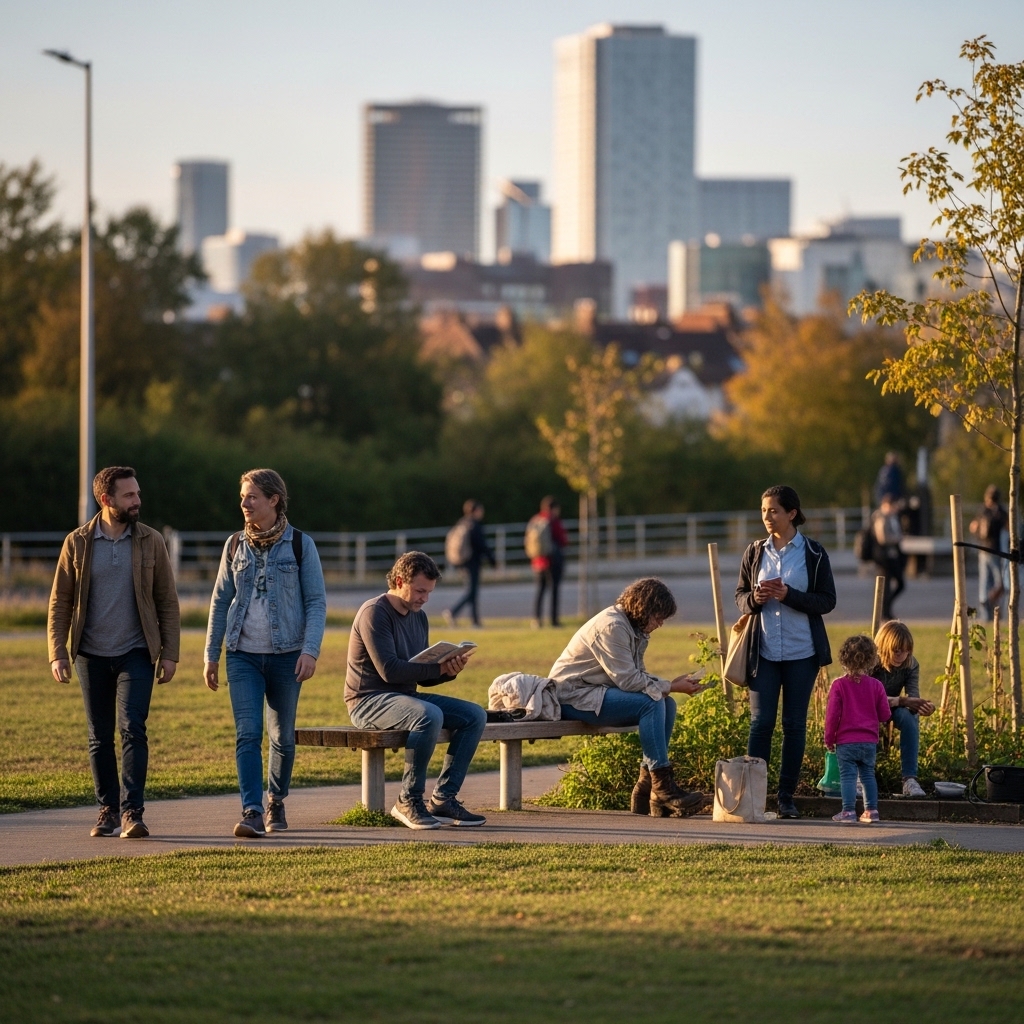
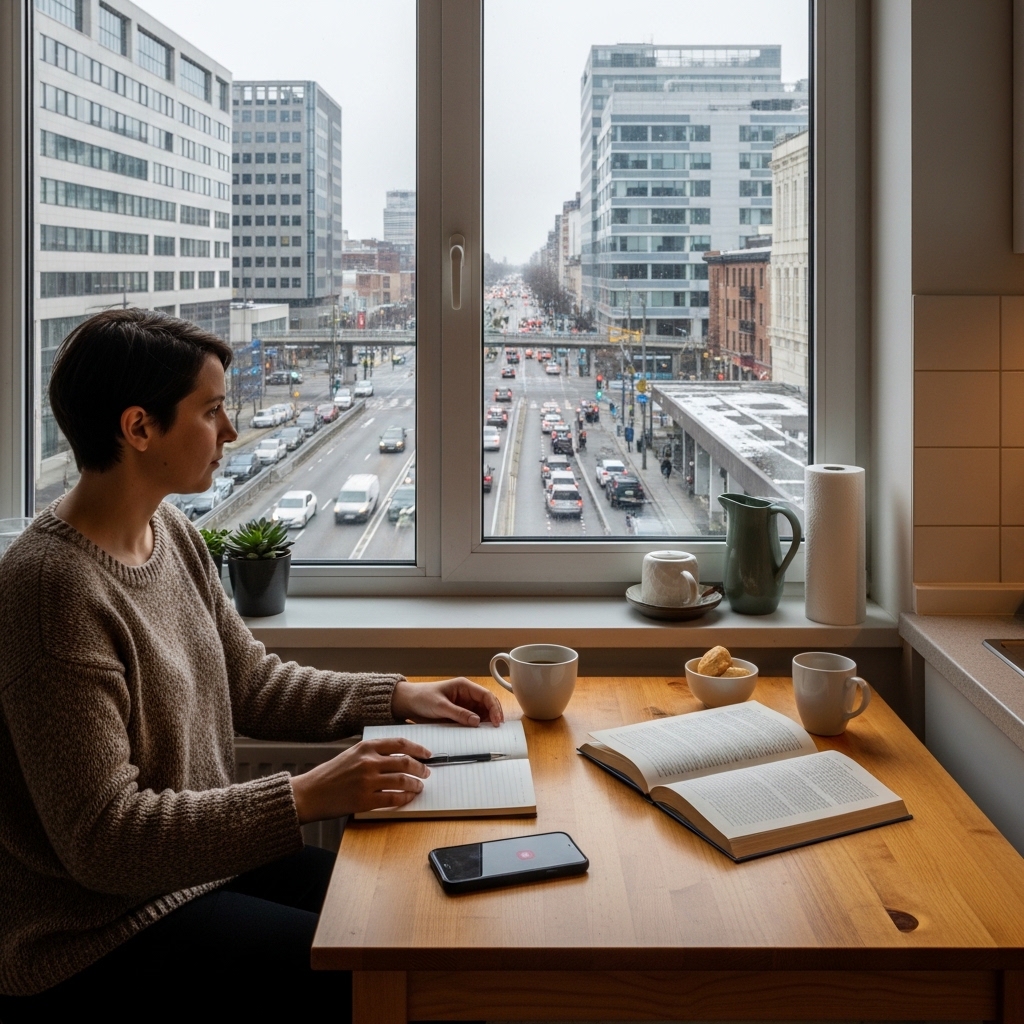
As work, technology and social life accelerate, a growing number of people are choosing slower routines not as an escape from modern life, but as a way to survive it with more attention and control.
The modern day begins before many people are fully awake. A phone lights up. Messages have arrived overnight. News alerts compete with work notifications. Calendar reminders appear beside delivery updates, payment prompts, social media posts and family obligations. Before breakfast, the mind is already moving across several worlds at once. For millions of people, speed has become the background condition of ordinary life.
Against that pressure, slow living has emerged as a quiet but increasingly visible response. It is not a single movement, a luxury aesthetic or a rejection of technology. At its simplest, it is the attempt to live with more intention in a culture that rewards constant availability. It asks a basic question that many people now find urgent: if everything is faster, why do so many people feel they have less time?
The appeal of slow living has grown as daily life has become more fragmented. Work no longer ends neatly when the office closes. Hybrid schedules, global teams and mobile devices have extended the workday into early mornings, evenings and weekends. Social platforms turn leisure into performance. Online shopping reduces waiting but increases impulse. Streaming services offer endless entertainment while making rest feel strangely unfinished. The result is not only busyness, but a persistent sense of being pulled.
Recent workplace research has pointed to a widening gap between organizational demands and human capacity. Employees face more meetings, more messages and more expectations to respond quickly. Artificial intelligence and automation may improve productivity, but they also raise the pace at which work can be requested, revised and delivered. In this environment, slow living is less about nostalgia than self-protection. It is a way of setting boundaries around attention, energy and meaning.
The idea has roots in older movements. The slow food movement began as a response to fast food and industrialized eating, defending local ingredients, shared meals and cultural traditions. Over time, the word “slow” expanded into travel, fashion, parenting, design and work. Its meaning changed from literal speed to quality of experience. A slow meal is not simply one that takes longer. It is one prepared and eaten with care. A slow morning is not an empty morning. It is a morning not immediately surrendered to external demands.
For many younger adults, especially those who entered the workforce during years of economic uncertainty, climate anxiety, pandemic disruption and digital overload, slow living carries a different emotional weight. It reflects skepticism toward the promise that more productivity will automatically lead to a better life. Hustle culture once framed exhaustion as ambition. Slow living questions that bargain. It suggests that a life measured only by output may become efficient while losing depth.
This does not mean that people embracing slower habits are withdrawing from responsibility. Many still work demanding jobs, raise children, study, care for relatives and manage financial pressure. The change is often modest and practical. It may involve walking instead of scrolling during lunch, cooking a simple meal, leaving part of the weekend unscheduled, turning off nonessential notifications, reading a printed book, gardening, journaling, repairing clothes or choosing fewer purchases. These acts may appear small, but they are significant because they restore a sense of agency.
Attention is at the center of the shift. Digital life is designed to capture it, divide it and sell access to it. A person may sit alone in a room and still be surrounded by demands from employers, advertisers, influencers, strangers and algorithms. Slow living tries to return attention to the person using it. That can mean focusing on one task at a time, listening without checking a screen or allowing boredom to exist without immediately filling it. In a fast culture, uninterrupted attention has become a form of resistance.
The movement also reflects a growing recognition that the body cannot operate at the speed of software. Apps update instantly. Markets react in seconds. Messages cross continents in moments. Human nervous systems move differently. People need sleep, food, sunlight, movement, touch, silence and recovery. When life ignores those needs, stress accumulates. Burnout, loneliness and anxiety are not simply private weaknesses. They are often signals that the pace of life has exceeded the pace at which people can remain well.
Slow living has also entered conversations about consumption. Fast fashion, fast furniture, fast delivery and fast entertainment all promise convenience, but they can produce waste, debt and dissatisfaction. Slower consumption asks whether every desire needs to become an immediate purchase. It favors durability, repair, reuse and more deliberate spending. This makes the lifestyle attractive to people concerned about climate change, but it also appeals to those who are financially stretched. Buying less can be both an environmental choice and an economic necessity.
There is, however, a tension at the heart of the trend. Slow living is often presented online through beautiful images: linen clothing, handmade ceramics, quiet countryside homes, expensive candles, organic food and minimalist interiors. That version can make slowness look like a product available mainly to the wealthy. A single parent working two jobs, a nurse on rotating shifts or a delivery driver paid by the task may not have the same freedom to slow down. The risk is that a response to pressure becomes another consumer identity.
A more realistic understanding of slow living must account for inequality. Time is not distributed evenly. Some people can buy convenience, outsource labor and choose flexible work. Others live under schedules controlled by employers, transport systems, caregiving duties or insecure income. For them, slow living cannot mean a complete redesign of life. It may mean protecting ten minutes of quiet, refusing one unnecessary obligation or building small rituals of control inside difficult conditions. The politics of slowness therefore cannot be separated from wages, housing, healthcare, childcare and labor rights.
Businesses have begun to notice the language of slowness, though not always its substance. Some companies promote wellness days, mindfulness apps and digital detox campaigns while continuing to reward constant availability. Employees may be encouraged to rest, but also expected to answer late-night messages. The contradiction is increasingly visible. A workplace cannot solve burnout by asking workers to meditate while leaving the causes of overload untouched. Genuine slowness at work would require fewer unnecessary meetings, clearer priorities, protected focus time and respect for life outside the job.
Schools and families are facing similar questions. Children are growing up in environments of accelerated achievement, constant assessment and digital stimulation. Parents may feel pressure to optimize every hour with lessons, sports, tutoring and enrichment activities. Slow living offers a counterargument: unstructured time is not wasted time. Play, rest and ordinary family routines help children develop imagination, resilience and emotional security. The challenge is that parents themselves are often exhausted, making slower family life difficult to practice even when they believe in it.
Urban life is also being reconsidered through this lens. The rise of walkable neighborhoods, cycling infrastructure, public parks, local markets and “15-minute city” planning reflects a desire to reduce the friction of daily life. A slower city is not one that rejects ambition or density. It is one where people do not have to spend hours commuting, where public space encourages human contact and where daily needs are reachable without constant stress. In that sense, slow living is not only personal. It can be designed into streets, housing and transportation.
Technology remains the most complicated part of the story. Slow living is not necessarily anti-technology. Many people use digital tools to support slower lives: meditation apps, shared calendars, remote work, online learning, community groups and navigation tools. The issue is not whether technology exists, but whether it serves human priorities or continuously redirects them. A slower relationship with technology may involve choosing when to be reachable, which platforms deserve attention and which forms of convenience quietly create dependence.
The growing interest in slow living suggests that people are not only tired. They are also rethinking success. The old markers remain powerful: income, status, achievement and visibility. But they are increasingly being weighed against sleep, health, relationships, autonomy and peace of mind. For some, success now includes having evenings that are not consumed by work, meals not eaten in front of a screen and friendships not maintained only through hurried messages.
The future of slow living will likely be uneven. For some, it will remain a personal lifestyle choice. For others, it will become part of broader debates about work, technology, climate and public health. Its most important contribution may be cultural: it gives language to a feeling many people already have. Life has become faster than feels natural. The human response is not always to accelerate further. Sometimes it is to pause, look around and ask what speed is actually for.
Slow living does not promise a perfect life. It cannot remove economic pressure, stop technological change or make the modern world simple. But it can remind people that speed is not the same as progress, and that being constantly connected is not the same as being fully alive. In an age that treats attention as a resource to be captured, choosing where to place it may be one of the most human acts left.