
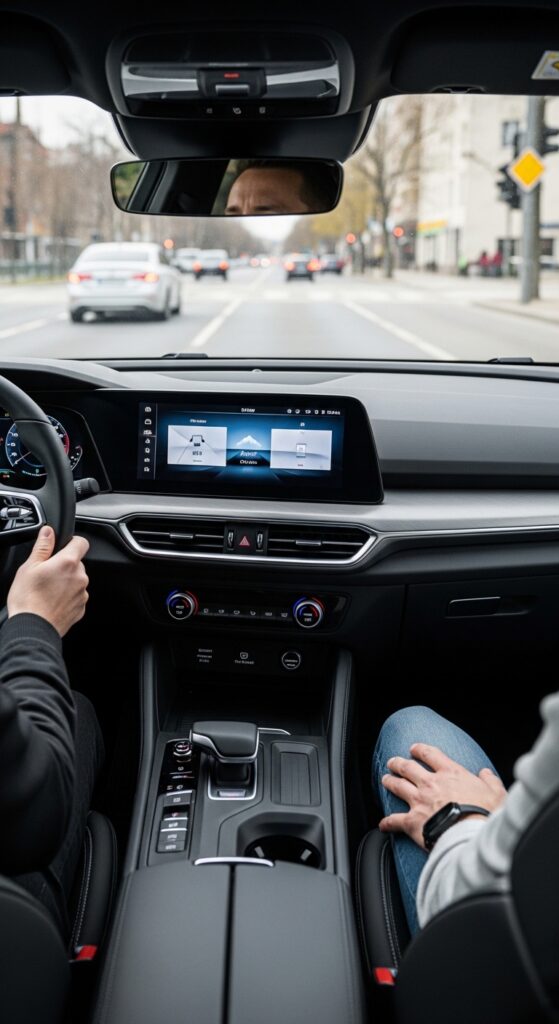
Software, artificial intelligence and connected services are changing the automobile as deeply as the shift from gasoline to electricity.
The modern car is no longer defined only by its engine. Increasingly, it is defined by code. From navigation and driver assistance to entertainment, battery management and remote updates, software has become one of the most important battlegrounds in the global auto industry.
This transformation is visible inside the cabin. Large touchscreens have replaced many physical buttons. Voice assistants respond to commands. Digital dashboards adjust to driving modes. Mobile apps can lock doors, start climate systems and monitor charging. In some vehicles, performance features can be activated through subscriptions or software updates long after the car leaves the factory.
For automakers, the appeal is clear. A software-defined vehicle can generate revenue after purchase. It can receive improvements without a dealership visit. It can collect data that helps manufacturers understand how customers drive and what services they may buy. The model resembles the technology industry more than the traditional car business, where most revenue came from the original sale, financing and maintenance.
But the shift also brings risk. Consumers may resist paying recurring fees for features they believe should be included. Regulators may scrutinize how driving data is collected and stored. Cybersecurity experts warn that connected cars create new attack surfaces, especially as vehicles communicate with phones, charging stations, cloud servers and other infrastructure.
The stakes are especially high for driver-assistance systems. Automakers are racing to offer features that can keep a car centered in its lane, manage speed, park automatically or respond to hazards. Some companies market these systems aggressively, raising public expectations about automation. But full autonomy remains difficult. Roads are unpredictable, weather can interfere with sensors, and legal responsibility after crashes is still unresolved.
China has become a major arena for intelligent-vehicle development. At the 2026 Beijing Auto Show, domestic and global manufacturers displayed smart cockpits, AI features and advanced driving systems. The competition reflected a market where consumers expect cars to feel as technologically advanced as smartphones. It also showed how software is becoming a source of national industrial strength.
Legacy automakers face a difficult adjustment. They spent decades perfecting engines, transmissions, safety structures and manufacturing scale. Now they must recruit software engineers, manage cloud platforms and shorten development cycles. Some have struggled with delayed launches and buggy systems. Others have partnered with technology companies to close the gap.
The shift affects repair and ownership. Independent mechanics may find it harder to service vehicles locked behind proprietary software systems. Owners may depend more on manufacturer updates. Used-car buyers may need to consider whether a vehicle’s digital services remain supported. A car’s value could be shaped not only by mileage and mechanical condition, but by software compatibility.
There is also a cultural change. Drivers once judged cars by how they sounded, shifted and handled. Many still do. But younger buyers may place equal weight on interface design, connectivity and intelligent features. A slow or confusing infotainment system can damage a vehicle’s reputation as much as a weak engine once did.
The software-defined car promises safer roads, cleaner performance and more personalized ownership. It also raises questions about control, privacy and durability. A vehicle can last 15 years or more. Software businesses often move faster than that. The challenge for the industry is to make cars smarter without making them disposable, intrusive or dependent on services that may vanish.
The automobile is becoming a computer on wheels. The question now is whether it can remain a trustworthy machine as well.”””
