
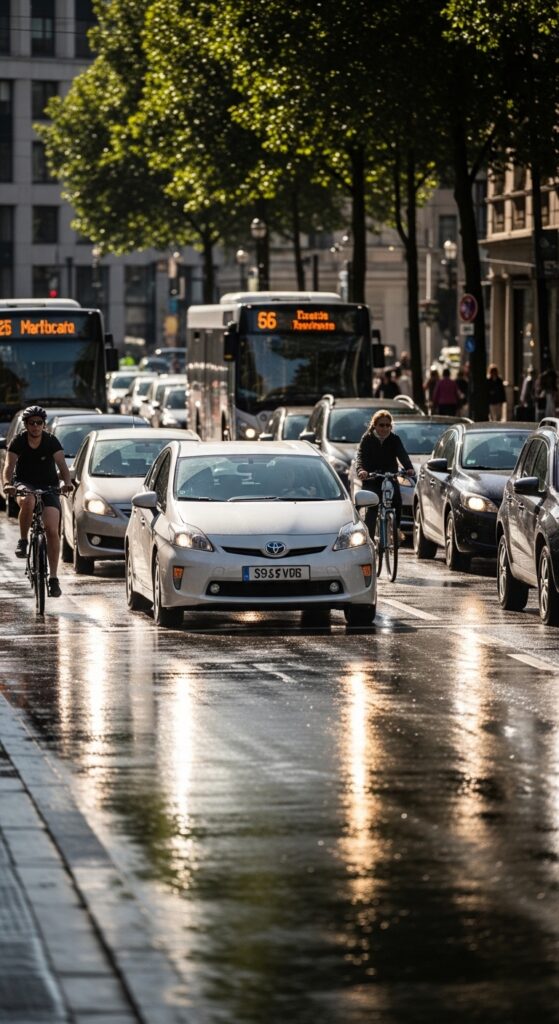
As electric adoption faces practical limits, hybrids are gaining renewed importance for consumers and automakers seeking a bridge between gasoline and batteries.
For years, hybrid cars were treated as a transitional technology, useful but temporary. The future, many executives and policymakers argued, would be fully electric. Yet as the global auto market enters a more complicated phase, hybrids have returned to the center of the conversation.
The reason is simple: many drivers want lower fuel costs and reduced emissions, but they are not ready to depend entirely on charging networks. Hybrid vehicles offer a compromise. They use electric motors to improve efficiency while retaining gasoline engines for range and convenience. For buyers worried about public charging, cold-weather performance or long-distance travel, that combination remains attractive.
In the European Union, hybrid-electric vehicles captured 34.5 percent of new car registrations in 2025, according to the European Automobile Manufacturers’ Association. Battery-electric vehicles grew as well, reaching 17.4 percent, but hybrids remained the most popular power type. The figures showed that electrification is advancing, but not always in the form that early EV advocates expected.
Automakers have noticed. Several companies that once emphasized aggressive electric-only strategies are now giving hybrids a larger role. The shift is not necessarily a retreat from electrification. Instead, it reflects a more cautious reading of consumer behavior. Electric cars are expanding quickly, but price, charging access and regional infrastructure still shape buying decisions.
For households, hybrids can be easier to understand. They are refueled like conventional cars and usually do not require a home charger. In cities, they can reduce fuel use during stop-and-go driving. On highways, the gasoline engine provides familiar range. Maintenance can be more complex than in a pure EV, but the technology has matured over decades.
Plug-in hybrids occupy a more contested position. When charged regularly, they can handle many daily trips on electric power. When not charged, they can operate mostly as heavier gasoline vehicles, reducing their environmental benefit. Regulators are increasingly examining real-world emissions and whether official test results reflect actual use. The future of plug-in hybrids may depend on whether drivers charge them consistently and whether governments credit them as low-emission vehicles.
The hybrid revival also has industrial logic. Automakers can build hybrids using existing engine expertise while adding electric components. That can protect jobs in traditional powertrain plants and help companies meet emissions targets without moving every buyer immediately into a full EV. For suppliers, hybrids provide continued demand for engines, transmissions, batteries and power electronics.
But hybrids are not a final solution. They still burn fuel and produce tailpipe emissions. As battery costs fall and charging networks improve, fully electric vehicles are expected to take a larger share of the market. Governments with strict climate targets may eventually limit the role of combustion engines, even efficient ones.
The current moment is therefore defined by pragmatism. Consumers are not rejecting electrification; they are choosing versions of it that fit their lives. Automakers are not abandoning EVs; they are trying to avoid moving faster than infrastructure and affordability allow. In that space, the hybrid has found new relevance.
The road to cleaner transportation was often described as a direct highway from gasoline to electricity. In reality, it looks more like a network of routes, with hybrids carrying millions of drivers across the uncertain middle.”””
