
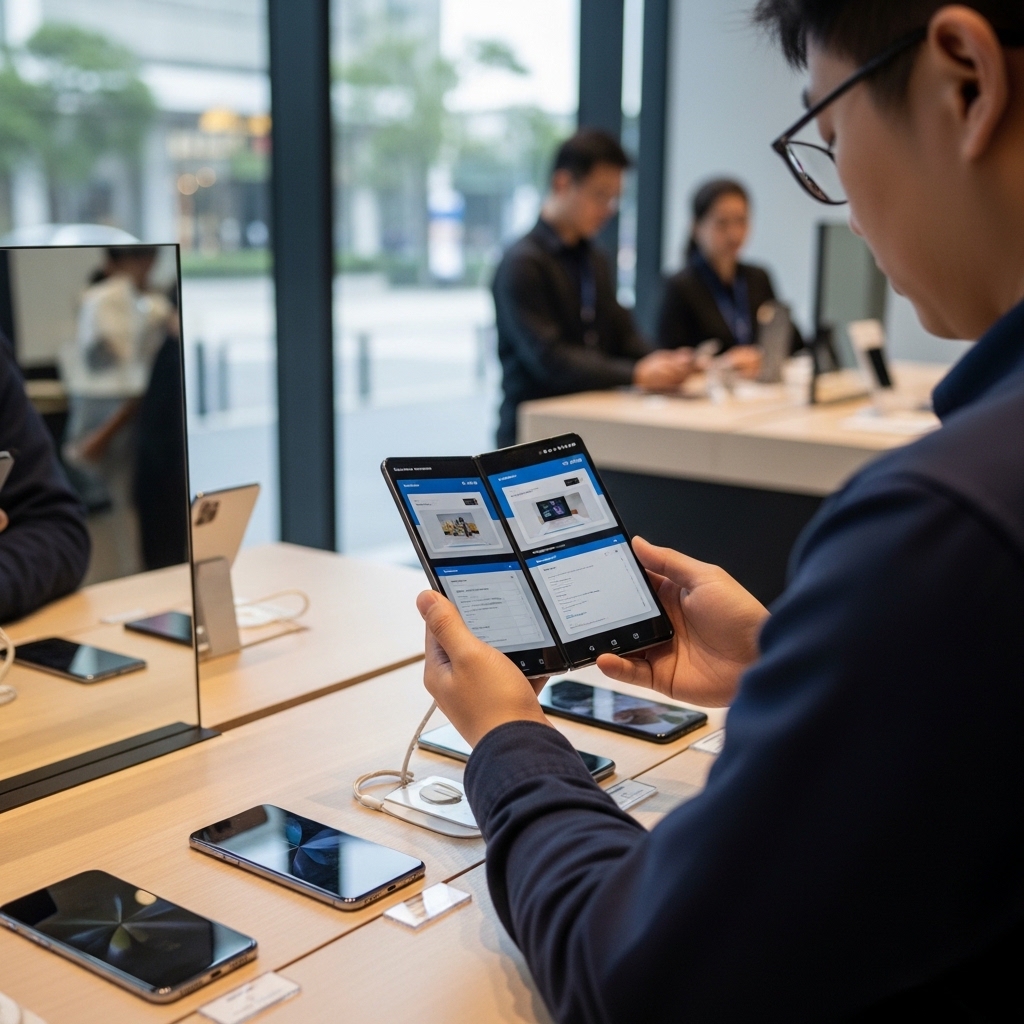
Once dismissed as fragile experiments, foldable smartphones are gaining credibility, but high prices and limited mass adoption still keep them from becoming the default phone for most consumers.
For years, the foldable phone has occupied an unusual place in the smartphone industry: too advanced to ignore, too expensive to become ordinary, and too fragile in public perception to fully replace the glass rectangles that dominate pockets worldwide. In 2026, the category is no longer a novelty. It has survived multiple product generations, attracted major investment from Samsung, Huawei, Motorola, Honor, Oppo, Vivo and Google, and pushed display engineering into territory that once looked impractical. But the central question remains unresolved: are foldables the next mainstream shift in mobile computing, or merely a luxury segment designed to make mature smartphone markets look exciting again?
The answer is increasingly mixed. Foldables are a real trend, but not yet a mass-market revolution. They are growing in technological importance faster than they are growing in unit volume. They are influencing design language, display supply chains, software multitasking and premium branding. Yet they remain a small slice of global smartphone shipments, constrained by price, durability concerns, repair costs and the simple fact that many users do not feel their current phones need to fold.
Market data shows both momentum and caution. Research firms have reported that foldable shipments reached record quarterly levels in parts of 2025, helped by stronger Chinese demand, thinner hardware and more competitive clamshell models. IDC forecast worldwide foldable smartphone shipments of about 20.6 million units in 2025, up 10 percent year on year, and projected stronger growth in 2026 if Apple enters the segment. TrendForce, however, estimated a similar 2025 shipment scale of 19.8 million units but said penetration would remain around 1.6 percent of the overall smartphone market. That contrast captures the category’s dilemma: growth is real, but the base remains small.
The strongest case for foldables is practical rather than cosmetic. Book-style models offer a pocketable device that opens into a small tablet, useful for reading documents, editing spreadsheets, watching video, navigating maps or running two apps side by side. For business users, frequent travelers, gamers and heavy multitaskers, the additional screen area can change daily habits. Clamshell models, meanwhile, appeal to buyers who want a compact device that still has a large screen when opened. The outer displays on newer flip phones have become more capable, allowing users to check messages, control music, take selfies and use selected apps without opening the device.
The technology has also improved. Hinges are slimmer and sturdier. Flexible OLED panels are brighter. Creases remain visible but are less intrusive on many newer models. Battery life has improved as chipsets became more efficient and manufacturers learned how to distribute cells across folding bodies. Water resistance, once absent from most foldables, is increasingly available on leading models. Software has matured as Android vendors refine app continuity, split-screen layouts and floating windows. These gains make foldables feel less like prototypes and more like premium tools.
Still, the barriers are significant. Price is the most obvious. Many book-style foldables still cost far more than conventional flagship phones. Even when discounts appear, the original retail prices often signal exclusivity. A buyer considering a foldable is not only comparing it with another phone, but often with a phone plus a tablet, a laptop accessory or months of mobile service. For many households, the practical benefit does not justify the premium.
Durability remains the second barrier. Manufacturers have made real progress, but public perception changes slowly. A traditional smartphone is already vulnerable to cracked glass and battery degradation; a foldable adds a hinge, a flexible panel and often a more complex repair process. Consumers who keep phones for four or five years may worry about dust, long-term screen wear, crease deepening or replacement costs after warranty coverage ends. Even if actual reliability improves, the fear of expensive failure can be enough to delay adoption.
The third challenge is software. A larger screen is valuable only when apps use it well. Some productivity apps, reading platforms and video services work naturally on foldables, but many mobile apps remain optimized for standard slab phones. Inconsistent layouts can make the unfolded screen feel like an enlarged phone rather than a truly different computing environment. Until developers treat foldables as a meaningful category, hardware innovation will outrun everyday usefulness.
There is also a cultural question. Smartphones became mainstream because they solved obvious problems for nearly everyone: communication, internet access, photography, navigation and entertainment in one device. Foldables solve more specific problems. They are excellent for people who want more screen without carrying another device, or who value compact design. But for many users, a large conventional phone is already good enough. That makes foldables aspirational rather than essential.
Competition is reshaping the market. Samsung helped define the modern foldable category and remains a global reference point, especially outside China. Huawei has pushed aggressively in China and has expanded the idea of what a folding device can be, including tri-fold designs. Honor, Vivo and Oppo have pressured rivals on thinness, battery capacity and pricing. Motorola has used the flip format to link foldables with fashion and nostalgia. Google’s Pixel Fold line has emphasized software integration. The result is a more diverse market than the Samsung-led era of the early 2020s.
China is especially important. Chinese brands have treated foldables not simply as luxury objects but as strategic showcases for domestic display technology, hinge engineering and high-end brand positioning. Local competition has pushed rapid iteration, and Chinese consumers have shown stronger appetite for unconventional premium devices than many Western markets. That has helped Huawei and rivals gain influence even as global availability varies.
Apple remains the largest unanswered question. The company has not yet released a foldable iPhone, but industry forecasts increasingly assume its eventual entry could expand the category’s legitimacy. Apple rarely enters a hardware segment first; it often waits until components, software and supply chains can support a polished experience at scale. If Apple launches a foldable, it would likely bring developer attention, accessory ecosystems and mainstream consumer confidence. But it could also reinforce foldables as ultra-premium products if pricing begins well above standard iPhone Pro models.
For now, the economics suggest foldables are less a replacement for ordinary smartphones than a profitable premium tier. In a mature market where annual upgrades have slowed, manufacturers need devices that can command higher prices and create visible differentiation. Foldables do both. They give brands a way to tell a story of innovation at a time when many slab phones look similar and improve incrementally. Even modest shipment volumes can matter if average selling prices are high.
That does not mean the category is hollow. Many once-expensive technologies began as luxury features before filtering down. OLED screens, multi-camera systems, high-refresh displays and 5G all entered the market unevenly before becoming common. Foldables may follow a similar path if panel costs fall, hinge designs standardize and repair networks improve. The flip-phone format, in particular, has a clearer route to broader adoption because it can eventually approach flagship pricing while offering a distinct lifestyle advantage.
The future of foldables may also depend on artificial intelligence. As phone makers add on-device AI assistants, translation tools, image editing, document summarization and multitasking features, larger screens could become more useful. A foldable that can display a video call, transcript, notes and translation window at once may feel more compelling than one that merely expands Instagram. AI could give the big inner screen a stronger purpose.
Yet the industry should be careful not to oversell the moment. A product can be innovative and still niche. A category can grow quickly and still account for a tiny share of global shipments. Foldables are not a passing gimmick, but neither are they inevitable replacements for every smartphone. Their success will depend on whether manufacturers can make them thinner, cheaper, tougher and more useful without asking consumers to accept too many compromises.
The fairest verdict is that foldable phones are a genuine trend trapped inside a luxury business model. They represent one of the few visible hardware changes left in smartphones, and they are pushing the industry forward. But until prices fall sharply and durability concerns fade, they will remain devices for enthusiasts, professionals and status-conscious buyers rather than the universal future of mobile phones.
In other words, the foldable phone is no longer just an expensive toy. But for most people, it is still an expensive choice.

